
 Written by: Jay Douglas
Last updated: 29 Dec., 2025
|
Blog posts use templates to allow consistent design while still displaying unique content for each post. A template defines the layout and sections used by one or more blog posts, including preset text, images, and additional sections.
A template can be applied to multiple blog posts or to a single post, depending on your needs.
Note: In order to customize your blog posts, you should already have a blog feed added to your website to get started.
Editing a blog post template
Your first blog post template is created automatically, but you can edit an existing template to customize how your blog posts appear.
1. In the left sidebar menu, go to  Website
 Pages
Pages
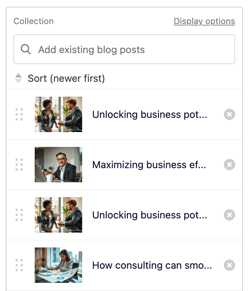
2. Scroll to Collection and select any blog post.
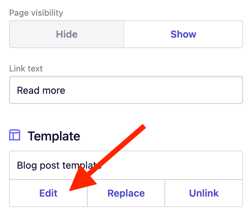
3. Scroll to Template and click Edit.
You’ll now see the sections that make up the blog post template.
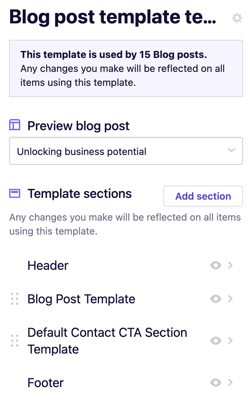
4. Add a new section, rearrange sections, or hide existing ones as needed.
5. Click any section to edit it.
6. Under Content, you can control what text and media appear on each blog post.
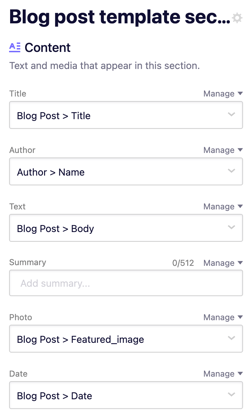
For example:
-
-
The Title can pull from the blog post title.
-
The Subtitle can pull from a custom subtitle field.
-
Other fields may include body text, call-to-action buttons, and images.
-
Mapping these fields ensures each blog post displays the correct content automatically.
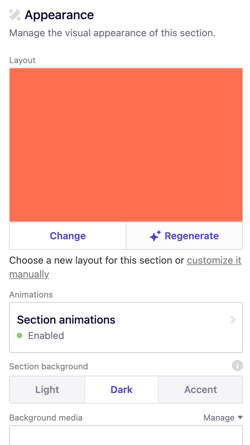
7. Under Appearance section, you can:
-
Change or regenerate the section layout
-
Enable animations
-
Choose light, dark, or accent backgrounds
-
Add background images or videos from your library or from the blog post itself
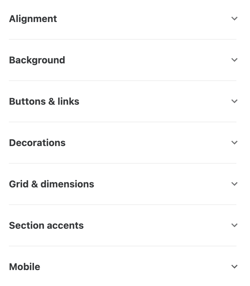
8. Scroll to the bottom to fine-tune:
-
Alignment
-
Background behavior
-
Buttons and links
-
Grid and spacing
-
Image settings
-
Order and positioning
-
Mobile display
Use these options to ensure your blog posts look consistent across devices.
Once saved, changes apply to every blog post using this template.
Mapping and unmapping content on blog templates
Mapping tells the editor to pull content from each individual blog post.
1. Open the blog post template.
2. Click a section then under Content, click Manage beside the field you want to control.
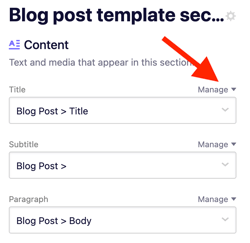
Choose one of the following options:
Map content to field
Select this option to pull content dynamically from each individual blog post. Choose an attribute such as Blog post title or Blog post body.
The field will update automatically for each post.
Display content on all pages
Select this option to make the content static. The same text or media will appear on every blog post using this template.
Display overwritable content
Select this option to create a new field that can be customized per blog post. You can add default content on the template, which will display if no custom content is added on a post.
3. Click Publish in the upper-right corner to make your changes live.
FAQs
How do I know what template a post is using?
Select the blog post. The template shown before opening the dropdown is the one currently applied. To change it, open the dropdown and select a different template.
How can I find a list of all blog posts using a template?
Access any blog post and click Edit. Then, select the dropdown under Preview blog post to see which posts are using this template.